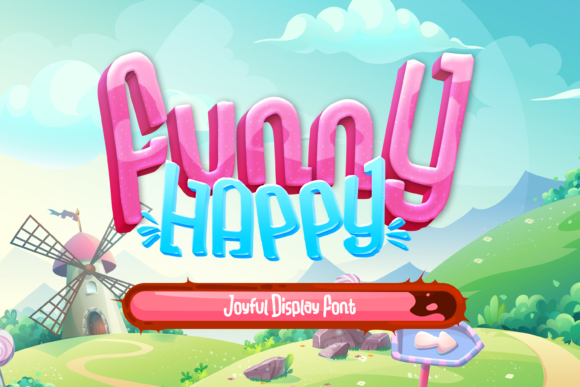
Funny Happy: A Playful Display Font for Branding
I remember the exact moment I realized my small business branding needed a serious upgrade. It wasn’t about changing my logo or rebranding my color palette; it was about the tiny details that customers see first. I was staring at a stack of thank-you cards and product stickers for my handmade shop, feeling like they looked a bit too generic. The text felt flat, disconnected from the warmth and joy I wanted my brand to convey. That’s when I started looking into Funny Happy, a cute and fun display font that promises to bring playfulness and authenticity to any design project. After testing it on everything from social media graphics to physical packaging, I’m here to share how this typeface can transform your business materials from ordinary to unforgettable.
Why Funny Happy Works for Children Activity Brands and School Projects
When you first encounter Funny Happy, its personality jumps off the screen. It is not just another decorative typeface; it embodies a specific kind of joy that is hard to replicate. As a display font, it is designed to be read in large sizes, making it perfect for grabbing attention quickly. The original description notes that it is the perfect choice for any children activity or school project, and I found this to be incredibly accurate. If you run a tutoring center, a kids’ party planning service, or an educational toy store, this font immediately signals approachability and fun.
In my experience working with various clients, one of the biggest mistakes small businesses make is trying to use playful fonts for body text. Funny Happy shines brightest when used as a headline or a title. Its chunky lettered style creates a visual weight that commands respect without being aggressive. For example, I recently helped a local after-school program update their flyers. By using Funny Happy for the main event titles, we created an immediate sense of excitement. Parents scrolling through community boards stopped because the text felt inviting rather than stiff. This font bridges the gap between professional design and child-friendly aesthetics, ensuring that your brand feels both trustworthy and engaging.
Using Funny Happy to Elevate Product Packaging and Labels
One of the most practical applications I’ve found for this funny happy font is in product packaging. Whether you are selling candles, baked goods, or skincare products, your label is often the first thing a customer holds. I tested this font on mockups for a line of artisanal soaps, replacing a standard sans serif header with Funny Happy. The difference was night and day. The chunky letters added a tactile quality to the digital design, making the soap bars look more substantial and handcrafted.
This type of fonts selection helps establish a consistent brand identity across different mediums. When your packaging matches the vibe of your website and social media, you build trust. Customers subconsciously associate visual consistency with reliability. However, there is a balance to strike. Because Funny Happy is a display font, it works best for short phrases, product names, or key selling points. I advise against using it for long paragraphs of text, as the unique shapes of the letters can reduce readability. Instead, pair it with a clean, simple sans serif font for descriptions and ingredients. This combination allows the playful energy of Funny Happy to shine while keeping the necessary information easy to read.
Enhancing Social Media Graphics and Digital Ads
In today’s digital landscape, your social media feed is your storefront. Scrolling past hundreds of posts, you need something that stops the thumb. I have found that Funny Happy is exceptionally effective for Instagram templates and online shop banners. Its bold, rounded forms stand out against busy backgrounds and colorful images. When creating promotional graphics for seasonal sales or new product launches, using this font adds a layer of personality that static text lacks.
For instance, if you are launching a limited-edition collection, using Funny Happy for the "New Arrival" banner creates a sense of celebration. It feels like an invitation rather than a transaction. This aligns perfectly with the font’s embodiment of playfulness and authenticity. Business owners often worry that using such a distinct font might look unprofessional, but the opposite is true. In a market saturated with corporate minimalism, a well-executed playful font can make your brand feel human and relatable. Just ensure that the contrast between the text and the background is high enough to maintain legibility on mobile screens, where most users will view your content.
Font Pairing Strategies for a Polished Look
To get the most out of Funny Happy, strategic font pairing is essential. A common mistake is letting the display font do all the heavy lifting, which can make designs feel cluttered. Since Funny Happy has strong visual character, it pairs beautifully with neutral, understated typefaces. I recommend combining it with a modern sans serif font for body copy, as the clean lines provide a calm backdrop for the playful headlines.
For brands leaning into a more elegant aesthetic, you might even try pairing it with an elegant serif font. The contrast between the chunky, informal display letters and the refined serifs can create a sophisticated yet fun vibe, ideal for boutique gifts or high-end craft supplies. When exploring design assets for your brand, always check the included styles and weights. Some versions of Funny Happy may offer alternates or ligatures that add extra flair. Utilizing these features can give your typography a custom look that sets you apart from competitors who stick to standard system fonts.
Practical Tips for Commercial Use and Licensing
Before incorporating Funny Happy into your commercial projects, it is crucial to review the licensing terms. As a commercial font, proper usage ensures you avoid legal issues down the road. Most premium fonts come with specific guidelines regarding print runs, merchandise, and digital distribution. Make sure to verify if the license covers all the platforms you intend to use, including physical packaging, website headers, and downloadable templates.
Additionally, consider the file formats provided. Having access to standard formats like OTF and TTF ensures compatibility with major design software like Adobe Illustrator, Photoshop, and Canva. This versatility is valuable for small business owners who may switch tools depending on the project. By taking the time to understand the technical aspects of the typeface, you can focus on what matters most: creating a brand identity that resonates with your audience. Funny Happy offers a unique blend of charm and professionalism, making it a smart investment for any business looking to inject some joy into their visual communication.